
The first test for endometriosis with high sensitivity (93%) and specificity (96%)
It is especially useful for women with unexplained infertility, IVF failure, or limited embryo reserves.
IVF or subsequent transfer attempts are five times less likely to succeed
For women with elevated BCL6 results and left untreated.
About ReceptivaDx
ReceptivaDx is an immunohistochemistry test that helps identify inflammatory conditions of the endometrium most often associated with endometriosis, including silent endometriosis where no symptoms are obvious.
The test provides enhanced screening for all stages of endometriosis and other conditions that interfere with implantation and endometrial receptivity.
While other tests evaluate the quality of embryos or determine optimal embryo transfer windows, only ReceptivaDx can accurately detect inflammatory conditions on the uterine lining, the most common endometrial issue impacting fertility success. The results can help indicate what is likely causing implantation issues.
The test specifically identifies BCL6, a protein biomarker associated with inflammation. BCL6 is dramatically over-expressed in women with endometriosis, the most likely inflammatory condition causing implantation problems and unexplained infertility. Progesterone is required for a normal pregnancy, so a protein that interferes with progesterone action would explain much about the problems encountered in women with endometriosis.
A negative BCL6 result provides reassurance to patients that endometriosis is not of concern.
A December 2017 cohort study in Fertility and Sterility demonstrated the prognostic value of BCL6 results.
Results were successful in predicting the likelihood of live birth on the next IVF transfer for patients experiencing unexplained infertility prior to the transfer. Since that early paper, over a dozen additional publications have come out highlighting the effectiveness of the test.
Cicero Diagnostics has performed more than 50,000 tests and continues to collect and publish results on outcomes.
When to use ReceptivaDx
Recommendations on when to use our test clinically center around proven failure histories including recurrent pregnancy losses (miscarriages), but the test also should be considered in women with limited embryo reserves or limited financial means to cover multiple IVF cycles.
ReceptivaDxTM testing is suggested for the following:

Women with unexplained infertility
Women with recurrent pregnancy loss
Women with limited embryo reserves
Women biopsied for receptivity timing biopsies (ERA)
Women with a history of implantation failure
Women with limited fertility coverage
Biopsy and Sample Collection for BCL6 and CD138
Natural Cycle: 7–10 days after ovulation.
Mock Cycle: 6–10 days after start of progesterone

Biopsy Procedure
*BCL6 analysis was not validated during egg retrieval cycles and therefore should not be obtained in that same cycle. Medications used during the egg retrieval cycle could impact results and do not represent an accurate portrayal of the uterine lining during an embryo transfer or natural cycle. Providers should wait until the next cycle to obtain an optimal biopsy.
Sample Submission
Preferred shipment days are Monday–Friday FedEx overnight. Friday shipments will arrive on Monday.
NOTE: The sample is stable at room temperature for up to 14 days.
Results will be available 5–6 business days from the date received by the lab.
Results can only be faxed to the fax number provided on the test request form. Online access to the results is available. Please call 800-795-5385 to register your center.

Understanding Results
Both biomarkers BCL6 and CD138 are performed using immunohistochemistry.
BCL6 is a protein marker highly associated with endometriosis. Results are reported as an H-score between 1-4. The H-score is calculated as the sum of the percentage of staining multiplied by an ordinal value corresponding to the intensity level and reported as (0 = none, 1 = weak, 2 = moderate, 3 = strong 4= very strong). Please note that the H-Score value is not an indicator of endometriosis disease stage.
The use of the test specific to infertility has been validated against laparoscopy-confirmed endometriosis patients using a cutoff value of 1.4. Any results above 1.4 should be considered positive and treated according to the guidelines under treatment. For clinical purposes, a value of 1.5 vs 4 will not affect protocols.
CD138 is an antigen specific to plasma cells and used to detect chronic endometritis. The results are calculated and reported based on presence of clusters of plasma cells. While rare stromal cells will be indicated, they are not considered consistent with a diagnosis of endometritis.
BCL6 Results
CD138 Results
Left untreated, studies show patients with positive BCL6 have less than 12% chance for success on the next transfer cycle.
Treatment Options
Cicero Diagnostics cannot recommend specific treatments based on results of our assay. However, the published data and results of our outcomes studies continue to support the use of the treatment strategies below in the setting of IVF.
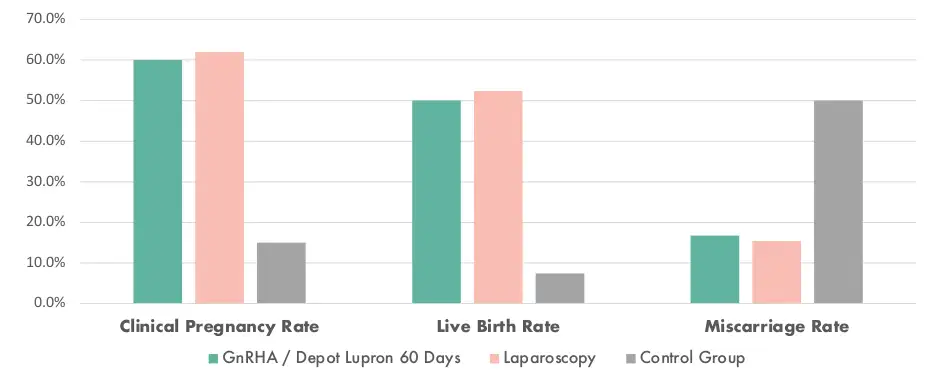
Graph: Hormone suppression vs laparoscopy
Treatment Strategies for a Positive BCL6 Test Result Fall Into 3 Categories:
As of 2020, clinical data supports both laparoscopic surgery or medical suppression using GnRh agonists as proven options for treatment of positive BCL6 patients.
GnRh agonist suppression plus letrozole may be superior to GnRh agonist suppression alone.

Treatment with letrozole alone during IVF has been shown to be effective in women with suspected endometriosis who lack Beta Integrin 3.
Treatment Strategies for a Positive CD138 Test Result
A combination regimen of ampicillin, gentamicin, and metronidazole provides coverage against most of the organisms that are encountered in chronic endometritis. Doxycycline should be used if chlamydia is the cause of endometritis. Ampicllin sulbactam can be used as a monotherapy.
Clinical Data
Cicero Diagnostics is a data driven company
We are dedicated to providing relevant and updated published clinical data to support the use of the ReceptivaDx test in the patient setting. As evidenced by the dozens of current independent studies as well as our own NIH supported research, Cicero Diagnostics provides more proven data than any other endometrial biopsy based test in the fertility sector.
Shared Experience Program
Cicero Diagnostics offers a cooperative data analysis program with our IVF center clients
Since 2019, we have provided centers a means to share their treatment and outcomes data on patients tested with ReceptivaDx. Participating centers with a minimum of 50 cases will have the data anonymously analyzed and compared to our aggregate outcomes database now exceeding 2,500 patients. Data from the Shared Experience Program is updated regularly and published in various formats. However, on an individual center level, we are able to dissect data to the specific needs of our clients.
For more information, contact Dan Angress at Dan@cicerodx.com
2026 Data from the Shared Experience Program
Frequently Asked Questions
IVF centers typically treat positive BCL6 patients with 60 days of GnRH agonists like Depot Lupron®, followed by an embryo transfer 5 to 6 days following oocyte retrieval (in fresh cycles) or during programmed estrogen/progesterone uterine replacement cycles (in frozen embryo transfers—FET cycles).
For patients who opt for surgical laparoscopy, excision or ablation of suspected endometriosis is performed, followed by management and advancement to IVF or FET. A recently published paper in the Journal of Assisted Reproduction and Genetics outlines the similar success of either laparoscopy or Depot Lupron (60 days) compared to cases of untreated positive BCL6. In this 7-year study, live birth rates went from around 10% in untreated patients to over 50% in treated patients.
For new users of ReceptivaDx, we are happy to provide references to centers with an established track record of treatment or a conversation with the authors of the study.
View here for a short review of cutoff values and interpretation
Candidates include all women with unexplained infertility who:
- Have failed one or more IVF cycles
- Have limited fertility coverage
- Have limited embryo reserves
- Have experienced recurrent pregnancy loss
The ReceptivaDx test is performed on an endometrial biopsy sample using immunohistochemistry and sent to one of our accredited pathologylabs. Results are faxed back to the sending IVF center in 7-10 days or available through a web portal.
The ReceptivaDx test was originally validated in natural cycle biopsies collected 7-10 days after ovulation. The natural cycle biopsy provides a significantly lower expense to the patient by removing the need for costly medications used in mock cycle biopsies.
If a mock cycle biopsy is preferred by your provider, ReceptivaDx has now been analyzed in over 15,000 mock cycle biopsies and can be performed safely without concern. Providers are reminded that 5 full days of progesterone administration (120 hours) must be onboard to obtain accurate results. Chances of a false negative can occur if protocols are not properly followed. While other endometrial biopsy tests for timing purposes suggest day 5 biopsies in their protocols, we recommend day 6 or day 7 at the earliest to obtain an accurate BCL6 result.
Unfortunately, the BCL6 marker was not validated during egg retrieval cycles and should not be obtained in that same cycle. Biopsy at the time of egg retrieval, while convenient for the provider and patient, occurs too early in the cycle to detect the presence of BCL6. Medications used during the egg retrieval cycle could impact results and do not represent an accurate portrayal of the uterine lining during an embryo transfer or natural cycle. It is suggested to wait until the next cycle after the egg retrieval cycle to obtain an optimal biopsy.
Samples are stable at room temperature during the entire shipping process and can be collected any day of the week. Biopsy timing information is provided below. Our ReceptivaDx collection kit comes complete with everything necessary to properly collect and submit a sample.
Yes. For a natural cycle, the biopsy should occur 7-10 days after ovulation. For a mock cycle, the biopsy should occur 5-10 days after the start of progesterone. Samples are sent overnight to one of our testing facilities and results are typically available within 7-10 business days.
The ReceptivaDx test (BCL6 and full pathology report only) costs $690. This includes overnight shipping costs via FedEx to our nearest licensed testing center. Additional markers can be added. CD138, a marker that identifies endometritis, can be ordered for an additional $145.
Payment is required via credit card at the time of sample submission. Patients may call our offices to make the payment in advance if preferred. Cicero Diagnostics provides a receipt that can be used for reimbursement from insurance or healthcare spending accounts. To receive this detailed receipt, please provide an email address on the test request form. International customers should contact us at 1-714-951-9245 or email us at info@receptivaDx.com for complete international shipping instructions.
Cicero Diagnostics published its first outcomes data results in 2020 using 7 centers across the US. Below is a summary of findings with live birth rates in above 63%.
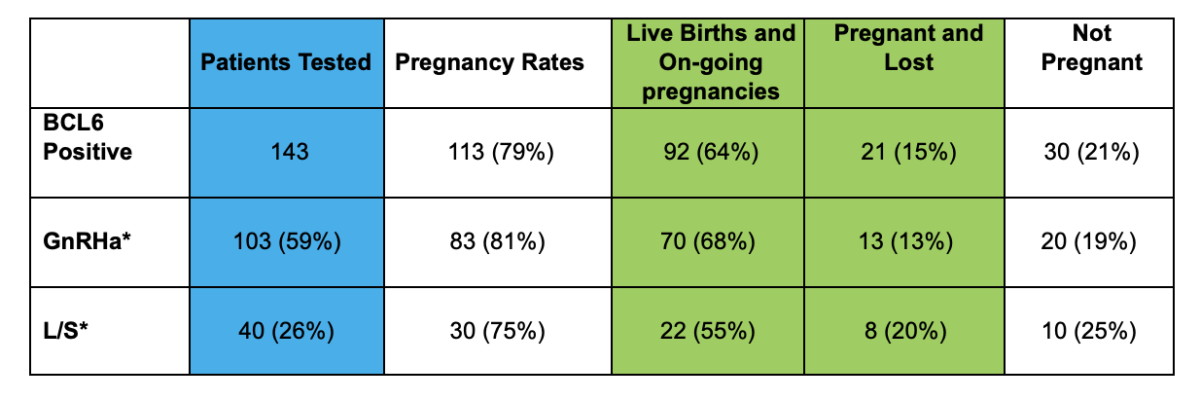
These results show success rates mimicking or exceeding the results recently published in a 7-year prospective study from 2019.
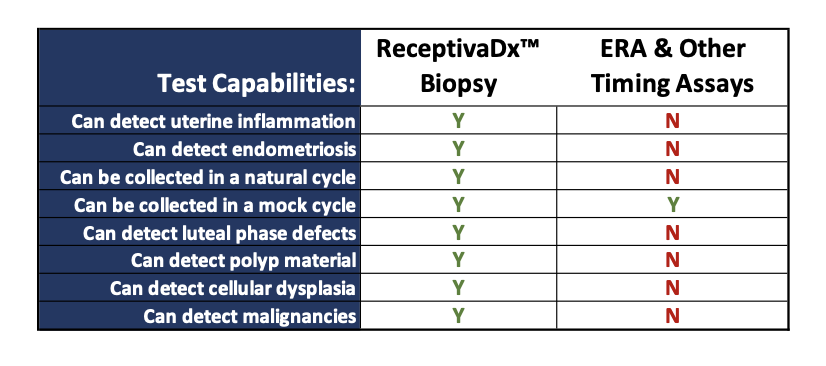
While both tests are taken from an endometrial biopsy, the tests differ completely in purpose. The ERA (Endometrial Receptivity Analysis) is a test that evaluates the expression of genes in an attempt to define the optimal embryo transfer window.
The following graph highlights the key differences between the tests.
Cicero Diagnostics, Inc. is a diagnostics company dedicated to the advancement of women’s healthcare. Cicero Diagnostics has exclusive rights to BCL6 analysis on endometrial tissue. As such, Cicero Diagnostics is the only licensed provider in the US for the detection of BCL6 as a marker in endometrial biopsy samples.
Our company maintains and collaborates with key academic research centers on various research studies. We are dedicated to developing new testing modalities for endometriosis and unexplained infertility. Cicero Diagnostics maintains two laboratory locations in the US. Both of these testing sites are fully licensed and operate under CLIA-established guidelines for the best laboratory practices.
Please feel free to contact us at 800-795-5385 for further information. International clients can email us at info@cicerodx.com or call us at 1-714-951-9245
Get Started
Call us at 800-795-5385 or send us an email at info@receptivadx.com for more information.